
Sweets
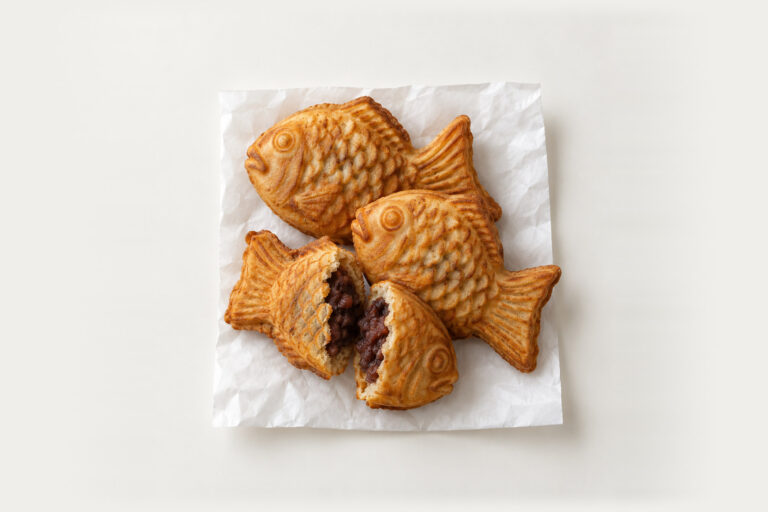
붕어빵 Bungeoppang
A fish-shaped bread baked in an iron mold and filled with sweet red bean paste, sold at winter street stalls.
Spice: Not spicy
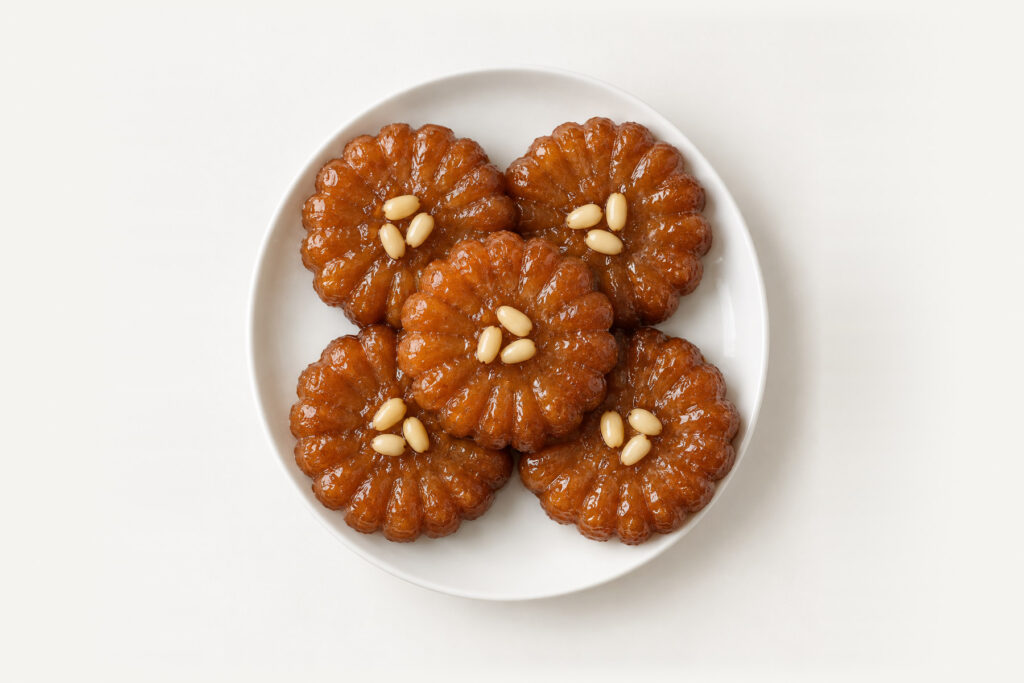
Hangwa (sweets)
A fried cookie of wheat flour, honey and sesame oil, soaked in syrup and eaten as a sweet snack.
| Fact | Details |
|---|---|
| Main ingredients | Wheat flour, honey, sesame oil, grain syrup |
| How it's served | A few pieces at room temperature, on a small plate or wrapped one by one |
| Spice level | Not spicy — No chili heat. |
| Diet | Vegetarian option — The dish is meat-free, or a meat-free version is commonly served. Still check the broth and sauces. |
| Allergens | Wheat · Sesame |
| Ask about | Pine nuts (tree nuts) are a traditional garnish; packaged yakgwa may contain soy or milk. |
| On the menu | 약과 (Yakgwa) |
| Also called | yakkwa · yak gwa · yakgua · Korean honey pastry |
| Region | Nationwide |
Based on the usual recipe. Restaurants vary, so always tell the staff.
The surface is sticky with syrup. Use a napkin or keep the wrapper under it.
The cookie is dense and very sweet, so one piece goes a long way.
Warm, unsweetened tea balances the honey and syrup.
Order it as 약과. Tea houses serve a few pieces with tea, and shops sell it by the piece or pack, so one person can buy it alone.
The name yakgwa comes from the honey in the dough. The same yak appears in yaksik and yakju. Yakgwa is a standard food at Korean feasts and funeral rites.
Sources: Encyclopedia of Korean Culture (encykorea.aks.ac.kr)
Sweets
A fish-shaped bread baked in an iron mold and filled with sweet red bean paste, sold at winter street stalls.
Spice: Not spicy
Usually yes. The dough is wheat flour, honey and sesame oil, with no meat. Packaged versions may add milk, so check the label or ask.
Because of the honey. Yak means medicine, and the name comes from the honey in the dough, as in yaksik and yakju.