
Bap (rice)
쌈밥 Ssambap
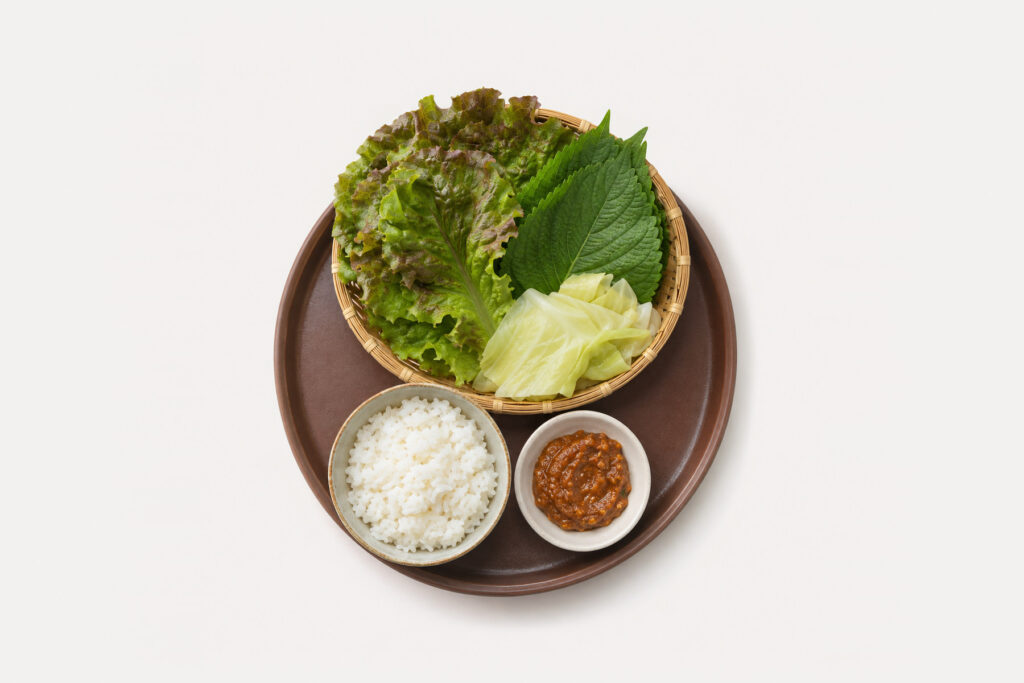
A meal of rice and fresh or steamed leaves, eaten by wrapping rice and soybean paste in each leaf.
- Leaf Wraps and Rice
- Spice: Mild
At a glance
| Fact | Details |
|---|---|
| Main ingredients | Lettuce and other leafy greens, rice, ssamjang |
| How it's served | A basket of fresh and steamed leaves, a bowl of rice, ssamjang and side dishes |
| Spice level | Mild — A little warmth. Fine for most people. |
| Allergens | Soy · Wheat · Sesame |
| Ask about | Sets often include stir-fried pork or grilled fish; the soybean paste may contain anchovy or beef. |
| On the menu | 쌈밥 (Ssambap) |
| Also called | ssam bap · ssambab · Korean lettuce wraps |
| Region | Nationwide |
Based on the usual recipe. Restaurants vary, so always tell the staff.
How to eat Leaf Wraps and Rice
Lay a leaf on your palm
Use one or two leaves. Stack a soft leaf on a firm one if they tear.
Add rice and ssamjang
Put a small spoonful of rice and a dab of paste in the center. Add meat, fish or a side dish if your set has them.
Wrap and eat in one bite
Fold the leaf closed and eat it whole. Biting a wrap in half usually spills the filling.
How to order it
Order it as 쌈밥. It is usually ordered per person, but some restaurants ask for at least two servings.
- On the menu: 쌈밥
- Usually sold: 1 serving, with rice
Where it comes from
Lettuce wraps are old: one story says Korean women at the Yuan court in late Goryeo wrapped rice in lettuce. By late Joseon, rice wrapped in greens on the first full moon was called bokssam, a wish for luck.
Sources: Encyclopedia of Korean Culture (encykorea.aks.ac.kr)
Questions about Leaf Wraps and Rice
Is ssambap vegetarian?
Only some sets. Sets often add pork or grilled fish, and the paste may contain anchovy or beef, so ask the staff.
How spicy is ssambap?
Mild. The leaves and rice have no heat, and the ssamjang adds only a little chili warmth. You control the heat by how much paste you use.
What leaves come with ssambap?
Usually lettuce plus a few others. Perilla leaves, steamed cabbage and pumpkin leaves are common, and they change with the season.
- By Jason Kim (Bumsoo)
- Last reviewed October 31, 2026