
Seaweed rice rolls
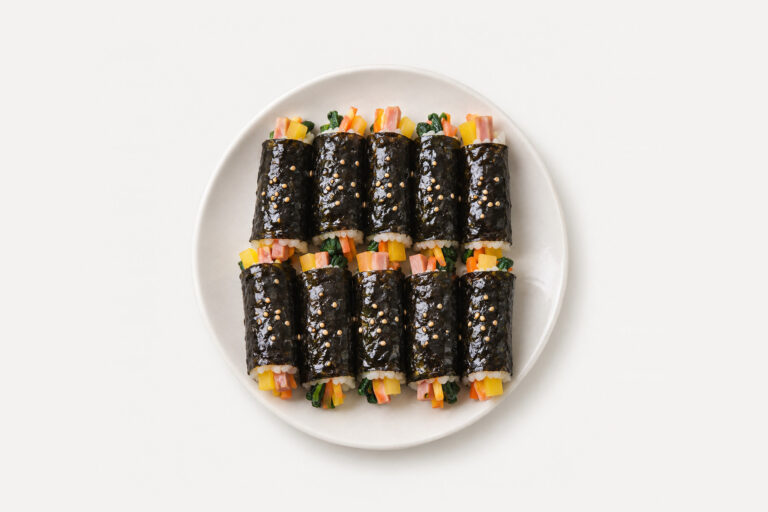
꼬마김밥 Kkomagimbap
Small, finger-size gimbap rolls with a few simple fillings, served whole and eaten in one or two bites.
Spice: Not spicy
Gimbap (seaweed rice rolls)
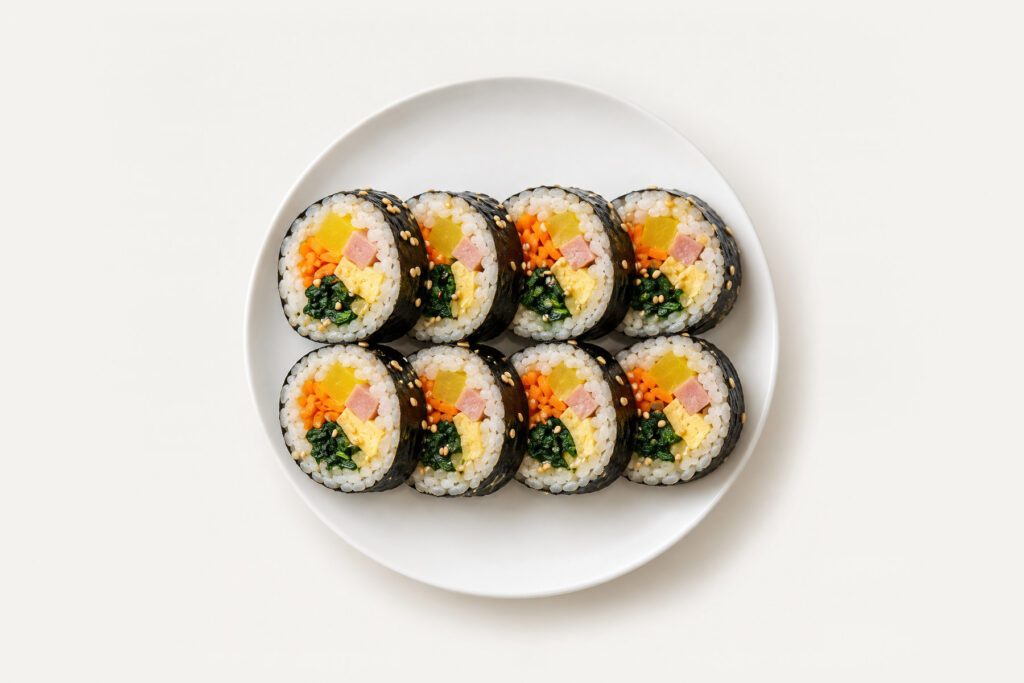
Rice and fillings rolled in seaweed and sliced into rounds.
| Fact | Details |
|---|---|
| Main ingredients | Rice, dried seaweed (gim), pickled radish, egg, spinach |
| How it's served | Sliced into bite-size rounds on a plate or wrapped in foil, with pickled radish on the side |
| Spice level | Not spicy — No chili heat. |
| Diet | Vegetarian option · Contains pork · Contains seafood — The dish is meat-free, or a meat-free version is commonly served. Still check the broth and sauces. Pork is a standard ingredient. Fish, shellfish, fish sauce, salted seafood (jeotgal) or anchovy stock is a standard ingredient. |
| Allergens | Sesame · Egg · Soy · Wheat · Fish |
| Ask about | Fillings vary: tuna, cheese, imitation crab (fish, egg) and ham are common. |
| On the menu | 김밥 (Gimbap) |
| Also called | kimbap · kimbab · gimbab · seaweed rice roll |
| Region | Nationwide |
Based on the usual recipe. Restaurants vary, so always tell the staff.
Each round is cut to fit in your mouth. Use chopsticks at the table; fingers are fine for take-away rolls.
The yellow pickled radish (danmuji) on the side adds crunch. It is often refilled for free.
At snack shops, many people also order spicy rice cakes and dip gimbap slices in the sauce.
Order it as 김밥. It is sold by the roll, so one person can order it alone, and many people take it away.
Today's gimbap is a Korean form of Japanese rolled sushi (norimaki), which came to Korea during Japanese colonial rule. Earlier, Koreans wrapped rice in seaweed or leaves as bokssam, eaten at the first full moon of the lunar year. Gimbap became widespread in the 1950s and 1960s. Gimbap shops and chains from the 1990s brought many new fillings.
Sources: Encyclopedia of Korean Culture (encykorea.aks.ac.kr)
Seaweed rice rolls
Small, finger-size gimbap rolls with a few simple fillings, served whole and eaten in one or two bites.
Spice: Not spicy
It can be. Standard rolls, even vegetable gimbap (yachaegimbap), often contain ham, imitation crab or fish cake. Ask for it without all three, and check the other fillings.
Not spicy. The standard roll has no chili, but kimchi or hot pepper versions are spicy, so check the name on the menu.
No. Gimbap rice is usually seasoned with sesame oil and salt, not vinegar, and the fillings are mostly cooked or pickled, not raw fish.