부대찌개 Budaejjigae
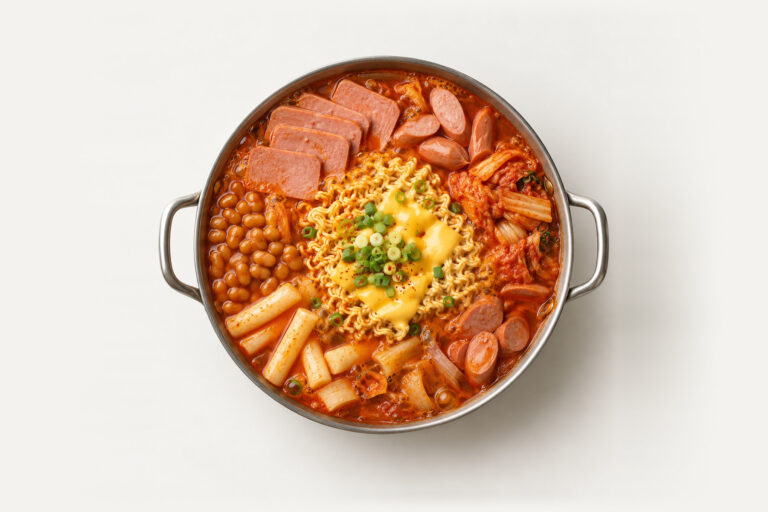
A spicy stew of ham, sausage, kimchi and instant noodles, cooked at the table and shared.
Spice: Medium
Jjigae (stew)
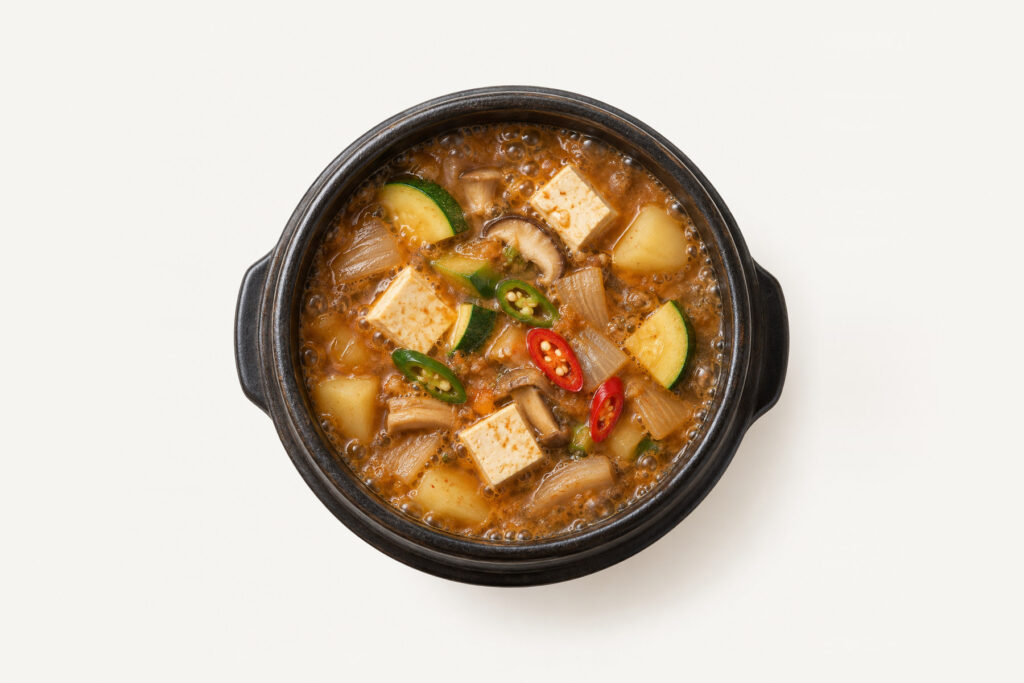
A stew of fermented soybean paste, tofu and vegetables, served bubbling hot with rice.
| Fact | Details |
|---|---|
| Main ingredients | Soybean paste (doenjang), tofu, zucchini, onion, anchovy stock |
| How it's served | Bubbling hot in a small earthenware pot, with a bowl of rice and side dishes |
| Spice level | Mild — A little warmth. Fine for most people. |
| Diet | Contains seafood — Fish, shellfish, fish sauce, salted seafood (jeotgal) or anchovy stock is a standard ingredient. |
| Allergens | Soy · Wheat · Fish |
| Ask about | Clams or beef are often added; the stock varies by restaurant. |
| On the menu | 된장찌개 (Doenjangjjigae) |
| Also called | doenjang jjigae · dwenjang jjigae · doenjang chigae |
| Region | Nationwide |
Based on the usual recipe. Restaurants vary, so always tell the staff.
The earthenware pot keeps the stew boiling for a while. Do not touch the pot, and blow on each spoonful.
Take a spoonful of stew with each bite of rice, or spoon some over your rice.
Soft tofu and zucchini break apart easily, so a spoon works better than chopsticks.
Order it as 된장찌개. It usually comes as a single portion with rice, so one person can order it alone.
It is also called tojangjjigae. Jjigae first appears in writing as jochi, in the late-Joseon cookbook Siuijeonseo. When stews split off from soups is not known exactly. In the Joseon royal court, jochi were sorted into clear ones and soybean-paste ones. Both were always served at royal meals.
Sources: Encyclopedia of Korean Culture (encykorea.aks.ac.kr)
A spicy stew of ham, sausage, kimchi and instant noodles, cooked at the table and shared.
Spice: Medium
A bubbling stew of aged kimchi, pork and tofu, eaten with rice.
Spice: Medium
A spicy stew of soft, unpressed tofu and seafood, served boiling in an earthenware pot with rice.
Spice: Medium
Usually not. The broth is usually made with dried anchovies, and some versions add clams, beef or pork. If you avoid meat or seafood, ask the restaurant.
Mild. Some versions add sliced chili peppers or chili flakes for a little warmth. Most people find it easy to eat.
Yes. It usually comes as a single portion with rice. At Korean BBQ restaurants, it is often ordered after the meat and shared.