
Rice cakes
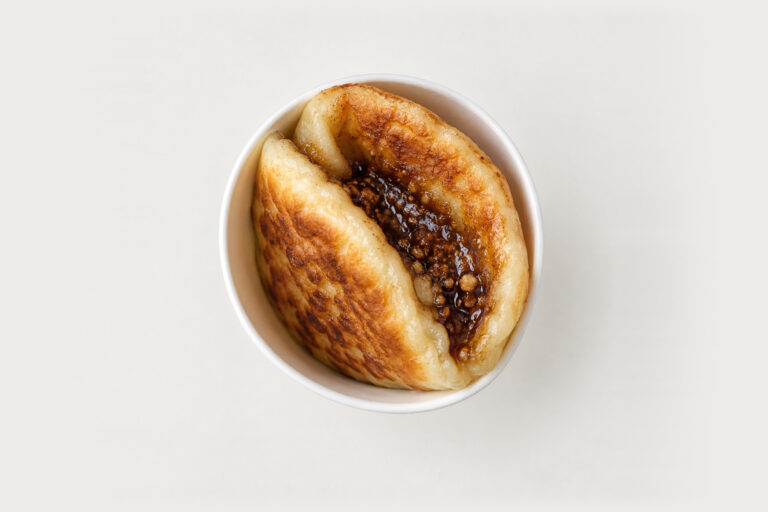
호떡 Hotteok
A fried wheat pancake with a brown sugar and cinnamon filling that melts into hot syrup, sold at street stalls.
Spice: Not spicy
Tteok (rice cakes)
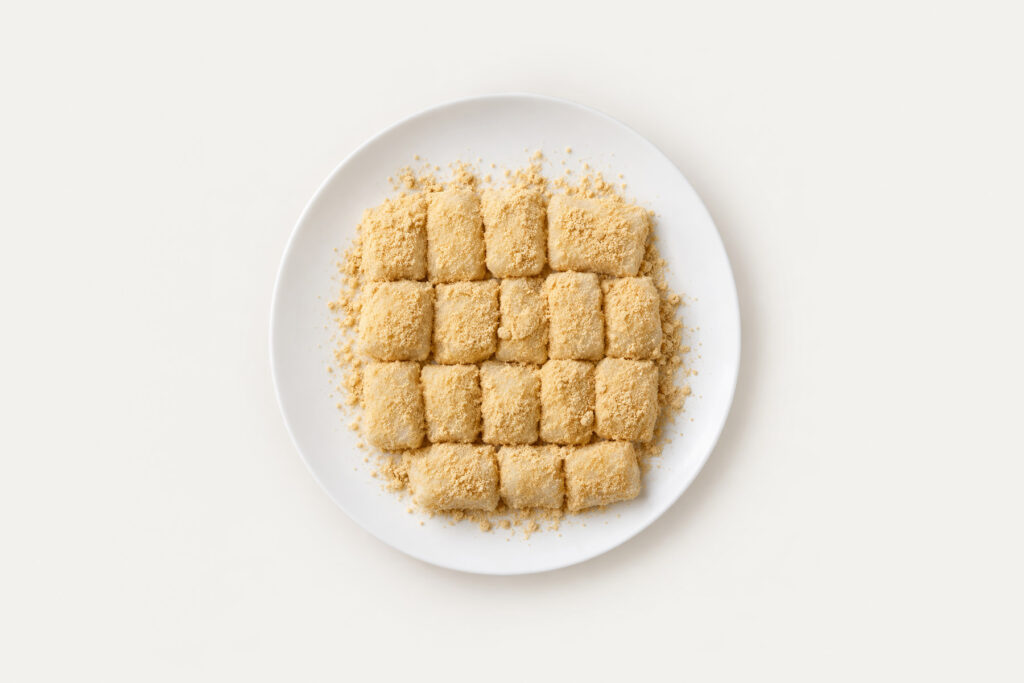
Chewy pieces of pounded glutinous rice coated in roasted soybean powder, eaten as a snack or with tea.
| Fact | Details |
|---|---|
| Main ingredients | Glutinous rice, roasted soybean powder |
| How it's served | Bite-size pieces at room temperature, on a plate or in a plastic pack |
| Spice level | Not spicy — No chili heat. |
| Diet | Vegetarian option — The dish is meat-free, or a meat-free version is commonly served. Still check the broth and sauces. |
| Allergens | Soy |
| Ask about | Coatings vary; some use sesame, red bean or nut powders instead of soybean powder. |
| On the menu | 인절미 (Injeolmi) |
| Also called | injulmi · injeolmi tteok · Korean mochi |
| Region | Nationwide |
Based on the usual recipe. Restaurants vary, so always tell the staff.
Shops often add toothpicks. The powder falls off easily, so hold the piece over the plate or pack.
The rice cake is soft but very sticky. Chew each bite fully before the next.
The soybean powder is dry, so a drink helps it go down.
Order it as 인절미. Rice cake shops and markets sell it in small packs, so one person can buy a pack alone.
Injeolmi is a pounded rice cake. It is listed among ritual foods of the Goryeo period, so its history is thought to be long. In the Joseon period, injeolmi from Yeonan was well known for the area's fine glutinous rice.
Sources: Encyclopedia of Korean Culture (encykorea.aks.ac.kr)
Rice cakes
A fried wheat pancake with a brown sugar and cinnamon filling that melts into hot syrup, sold at street stalls.
Spice: Not spicy
Usually yes. The usual version is glutinous rice with roasted soybean powder and no meat. Some shops add other coatings, so ask if you avoid certain ingredients.
Not exactly. Both are pounded glutinous rice, but injeolmi is cut into small pieces and coated in powder, usually with no filling.