
Saengchae (fresh namul)
무생채 Musaengchae
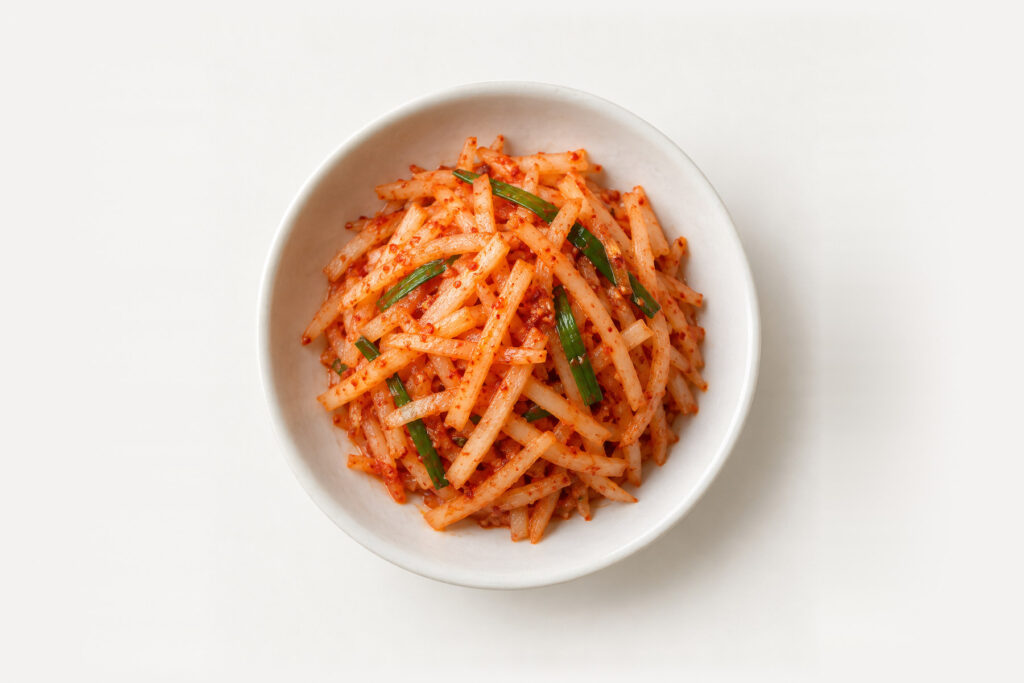
A cold side dish of thin raw radish strips dressed with chili flakes, vinegar and sugar, eaten with rice.
- Julienne Radish Fresh Salad
- Spice: Mild
- Vegetarian option
At a glance
| Fact | Details |
|---|---|
| Main ingredients | Korean radish, chili flakes, vinegar, garlic |
| How it's served | Crisp red radish strips in a small dish, served cold with the other side dishes |
| Spice level | Mild — A little warmth. Fine for most people. |
| Diet | Vegetarian option — The dish is meat-free, or a meat-free version is commonly served. Still check the broth and sauces. |
| Ask about | Some versions add fish sauce or salted shrimp; sesame seeds are often sprinkled on top. |
| On the menu | 무생채 (Musaengchae) |
| Also called | mu saengchae · moo saengchae · spicy radish salad |
| Region | Nationwide |
Based on the usual recipe. Restaurants vary, so always tell the staff.
How to eat Julienne Radish Fresh Salad
Take some with chopsticks
Musaengchae comes in a small dish for the table to share. Lift a few strips onto your rice or into your mouth.
Pair it with rice or the main dish
Eat it with rice, soup or rich meat like bossam. Some people mix it into a rice bowl with other side dishes.
Ask for a refill
Side dishes are often refilled for free. Some restaurants have a self-serve side dish bar instead.
On the table
Order it as 무생채. You rarely need to: it usually comes free as a side dish with a meal, and you can ask for more.
- On the menu: 무생채
- Usually sold: Included with a meal, as a side dish
Questions about Julienne Radish Fresh Salad
Is musaengchae vegetarian?
Usually yes. The common version is radish with chili flakes, vinegar, sugar, salt and garlic. Some versions add fish sauce or salted shrimp, so ask the staff if you avoid seafood.
How is musaengchae different from kkakdugi?
Musaengchae is not fermented. It is thin raw radish strips dressed fresh, while kkakdugi is cubed radish kimchi left to ferment.
- By Jason Kim (Bumsoo)
- Last reviewed October 24, 2026