
Porridge
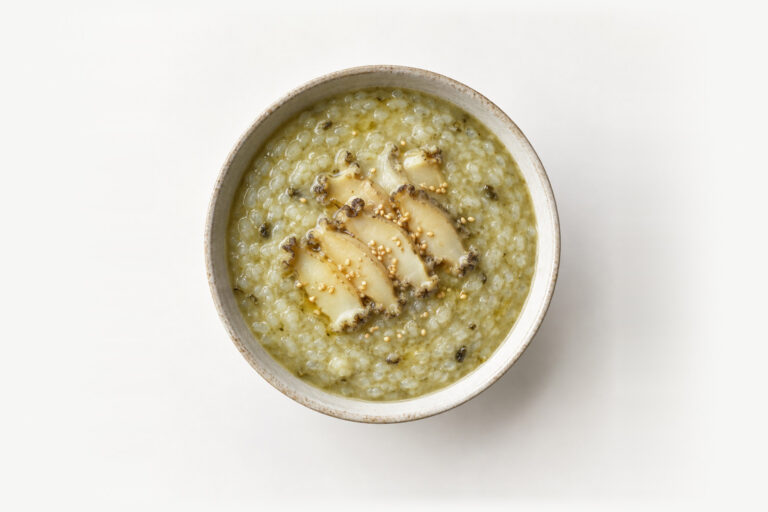
전복죽 Jeonbokjuk
A soft rice porridge simmered with sliced abalone, eaten warm as a mild meal or for breakfast.
Spice: Not spicy
Juk (porridge)
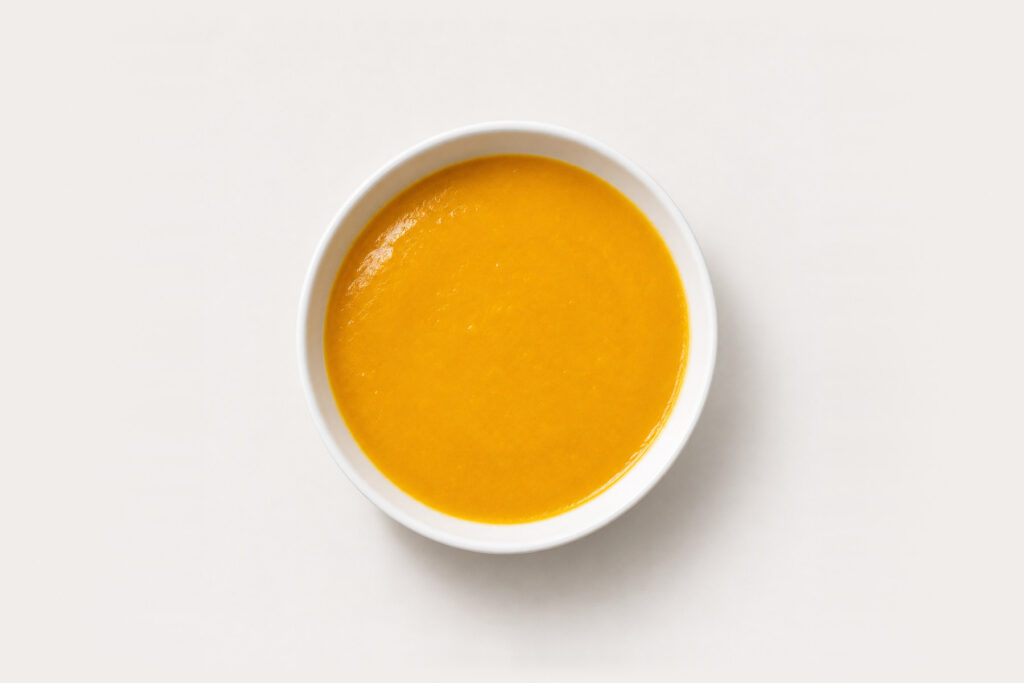
A smooth, sweet porridge of pumpkin and glutinous rice, eaten warm as a mild meal or snack.
| Fact | Details |
|---|---|
| Main ingredients | Pumpkin, glutinous rice |
| How it's served | Warm in a bowl, with kimchi and a few side dishes |
| Spice level | Not spicy — No chili heat. |
| Diet | Vegetarian option — The dish is meat-free, or a meat-free version is commonly served. Still check the broth and sauces. |
| Ask about | Red beans, soybeans or corn are sometimes added, and sweetness varies. |
| On the menu | 호박죽 (Hobakjuk) |
| Also called | hobak juk · hobakjook · pumpkin congee · sweet pumpkin porridge |
| Region | Nationwide |
Based on the usual recipe. Restaurants vary, so always tell the staff.
The thick porridge holds heat, so eat from the edge of the bowl first.
It is usually sweet already. Some places set out salt or sugar if you want to adjust it.
Some bowls come with small, chewy rice balls. Take them one at a time with the porridge.
Order it as 호박죽. It comes as a single portion, so one person can order it alone.
Pumpkins reached Korea after the Imjin War. Buddhist monks first grew them widely, so pumpkin was once called seungso. By the late Joseon period, it had become a common side food for ordinary people.
Sources: Encyclopedia of Korean Culture (encykorea.aks.ac.kr)
Porridge
A soft rice porridge simmered with sliced abalone, eaten warm as a mild meal or for breakfast.
Spice: Not spicy
Usually yes. It is made from pumpkin and glutinous rice, seasoned with sugar or salt. Ask the staff if you avoid any ingredient.
Not spicy. It is a sweet, mild porridge with no chili.
The main ingredient. Hobakjuk is yellow and sweet from pumpkin, while patjuk is dark red and made from red beans.