
Alcohol
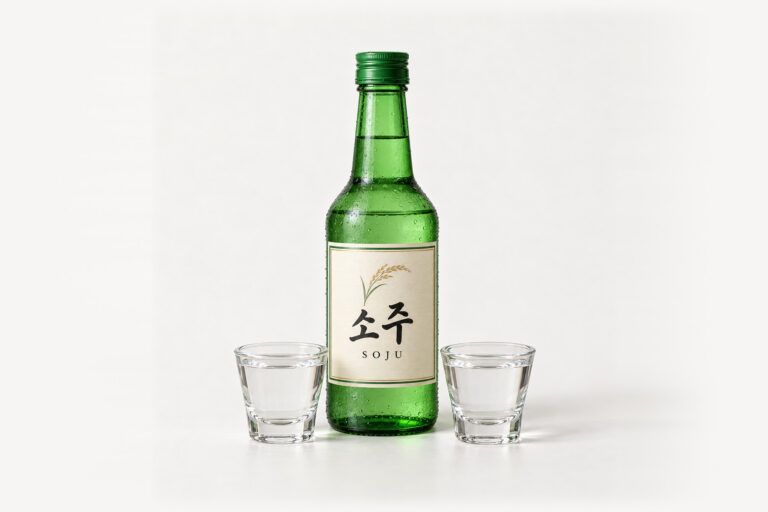
소주 Soju
A clear Korean distilled liquor, poured into small shot glasses and drunk with food, often shared at the table.
Spice: Not spicy
Sul (alcohol)
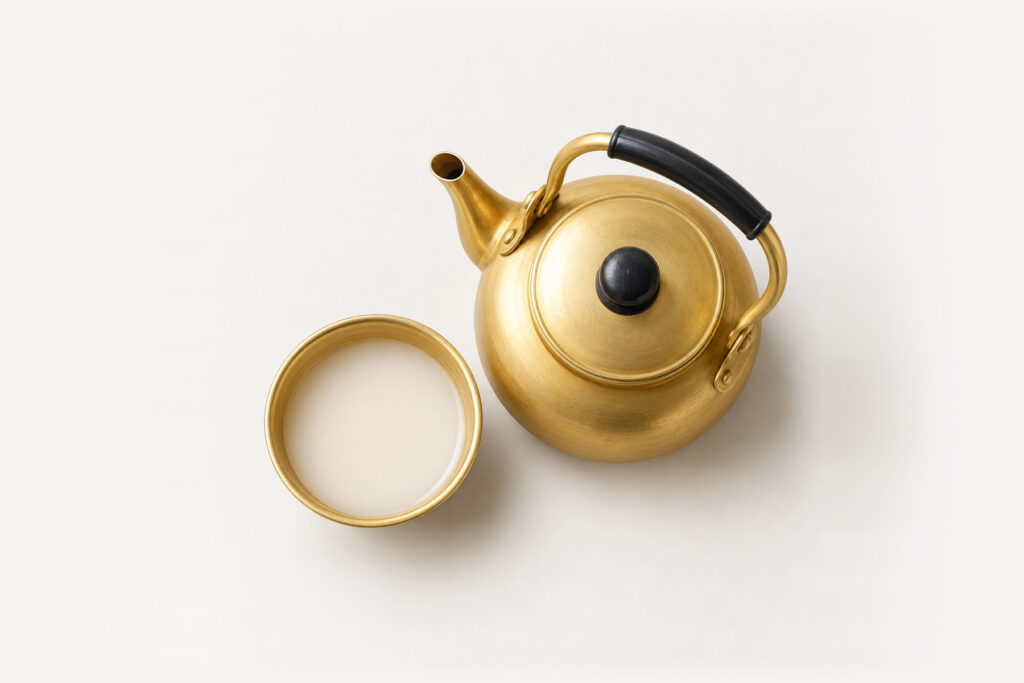
A cloudy, milky-white rice wine low in alcohol, usually shaken before pouring and often drunk with Korean pancakes.
| Fact | Details |
|---|---|
| Main ingredients | Rice (sometimes wheat flour), nuruk (a fermentation starter), water |
| How it's served | Usually a chilled bottle or kettle, with a shallow bowl or cup for each person at the table |
| Spice level | Not spicy — No chili heat. |
| Allergens | Wheat |
| Ask about | Some brands use rice-only starters; check the label on the bottle. |
| On the menu | 막걸리 (Makgeolli) |
| Also called | makkoli · makgeoli · makkeolli · Korean rice wine |
| Region | Nationwide |
Based on the usual recipe. Restaurants vary, so always tell the staff.
The rice settles at the bottom, so gently turn the bottle to mix it before opening.
Fill each other's bowls or cups. When someone older pours for you, hold your bowl with both hands.
Makgeolli is usually drunk alongside a meal or drinking food (anju), often a hot pancake such as pajeon.
Order it as 막걸리. It comes by the bottle or kettle, and one person can order a bottle alone, though it is usually shared.
Makgeolli first appears in written records in Yangjubang, under the name hondonju. From 1964, food shortages meant rice could not be used for it. It was brewed with imported wheat flour and corn instead. Today, makgeolli brewed from rice is popular and has taken its place as a traditional Korean liquor.
Sources: Encyclopedia of Korean Culture (encykorea.aks.ac.kr)
Usually, yes. The rice settles at the bottom, so mix it gently before pouring. Open the cap slowly, since some makgeolli is fizzy.
Yes. Adults can order a bottle alone, though it is usually shared at the table.
Often, yes. Pajeon, the green onion pancake, is a common partner, especially on rainy days.