
Cooked namul
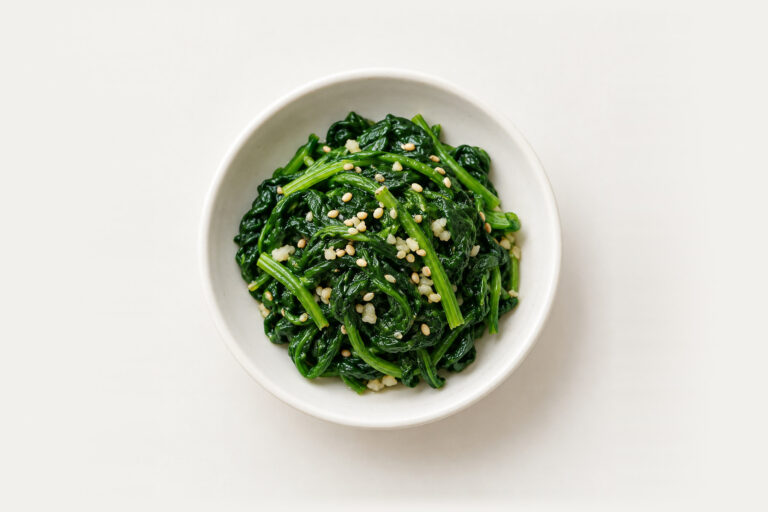
시금치나물 Sigeumchinamul
A small side dish of blanched spinach seasoned with sesame oil, garlic and salt, served with rice.
Spice: Not spicy
Sukchae (cooked namul)
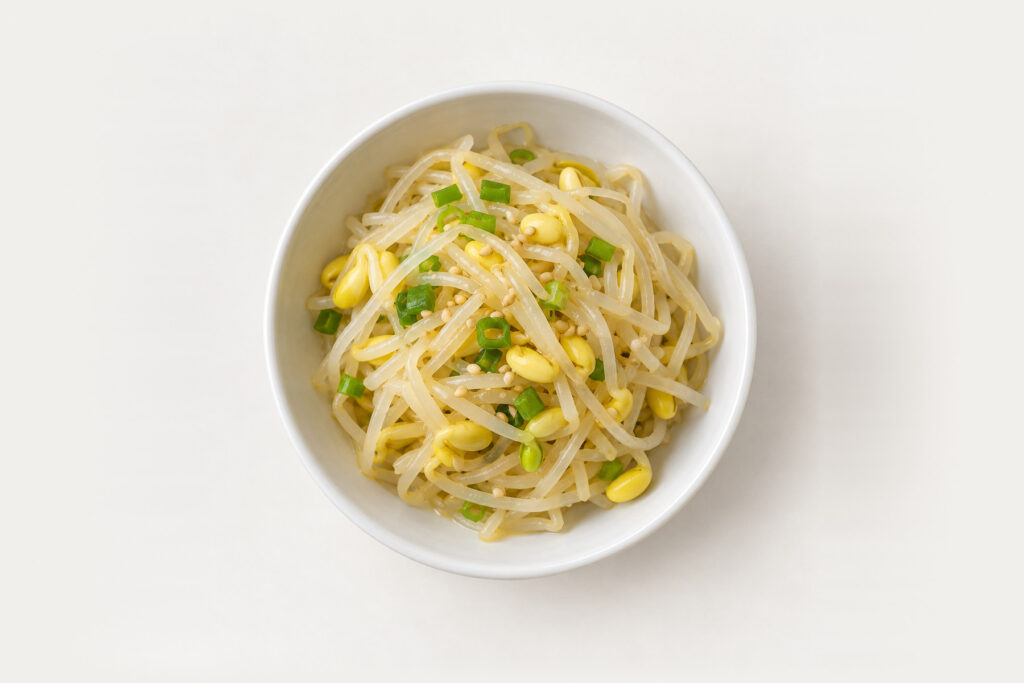
Blanched soybean sprouts seasoned with sesame oil, garlic and salt, often with chili flakes, served cold as a side dish.
| Fact | Details |
|---|---|
| Main ingredients | Soybean sprouts, sesame oil, garlic, salt |
| How it's served | A small heap in a side dish bowl, served cold with the other side dishes |
| Spice level | Mild — A little warmth. Fine for most people. |
| Diet | Vegetarian option — The dish is meat-free, or a meat-free version is commonly served. Still check the broth and sauces. |
| Allergens | Soy · Sesame |
| Ask about | Some versions are seasoned with soy sauce (wheat), chili flakes or fish sauce. |
| On the menu | 콩나물무침 (Kongnamulmuchim) |
| Also called | kongnamul muchim · kongnamul · kong namul · seasoned soybean sprouts |
| Region | Nationwide |
Based on the usual recipe. Restaurants vary, so always tell the staff.
The sprouts come in a small dish for the table to share. Lift a few at a time.
Eat it with rice, soup or grilled meat. Some people add it to a bowl of rice.
Side dishes, including kongnamulmuchim, are often refilled for free.
Order it as 콩나물무침. You rarely need to: it usually comes free as a side dish with a meal, and you can ask for more.
When Koreans began eating bean sprouts, the main ingredient, is not known. In Korean writing, they appear in a medical book from 1236 under the name daeduhwang.
Sources: Encyclopedia of Korean Culture (encykorea.aks.ac.kr)
Cooked namul
A small side dish of blanched spinach seasoned with sesame oil, garlic and salt, served with rice.
Spice: Not spicy
Often, yes. The usual version uses only sprouts and plant seasonings. Some versions add fish sauce, so ask the staff.
The sprout. Kongnamul is soybean sprouts with a large yellow head and a firm crunch, while sukjunamul uses thinner mung bean sprouts.